Kenchiku Kogei (建築工芸). [Architectural Craft]. Aisîôru (アイシーオール). [I see all].
EUR 320,-
Kenchiku Kogei (建築工芸). [Architectural Craft]. Aisîôru (アイシーオール). [I see all].
Tokyo, Koyosho.
Editor: Kawakita Renshichiro (川喜田 煉七郎).
Kawakita Renshichiro (1902-1975) was an architect and interior designer and a key figure during the early phase of modernism in Japan. In 1932 he founded the Institute of New Architecture and Industrial Arts with the aim of bringing the ideas of the Bauhaus school to Japan. The present monthly magazine (also launched in 1932) showcases aspects of modern commercial architecture (shops, restaurants, theatres, cinemas, libraries, schools, factories) as well as interior design (showcases, shelving, chairs etc.) from the West and their application in Japan. Most of the articles are by Kawakita himself but there are also translations from Western sources. ‘I see all’ was strongly influenced by the Russian and German avant-garde and later issues discuss the influence of technology on contemporary art (Hans Arp) and photography (montage). References are made to new publications and magazines for specific countries (Germany: Die Form; Moderne Bauformen, Die Neue Linie; Soviet Union: USSR in Construction, Cobetckay Apxntektypa) showing the keen awareness in Japan of modernist trends abroad.
The condition of this series of journals offered on the market today is often not perfect. The stapling used by the publisher is often rusty due to the high humidity in Japan. In most of the issues we offer, we have had the rusty staples removed and replaced by thread stitching or adhesive binding.
The individual issues are individually priced depending on the condition and contents.
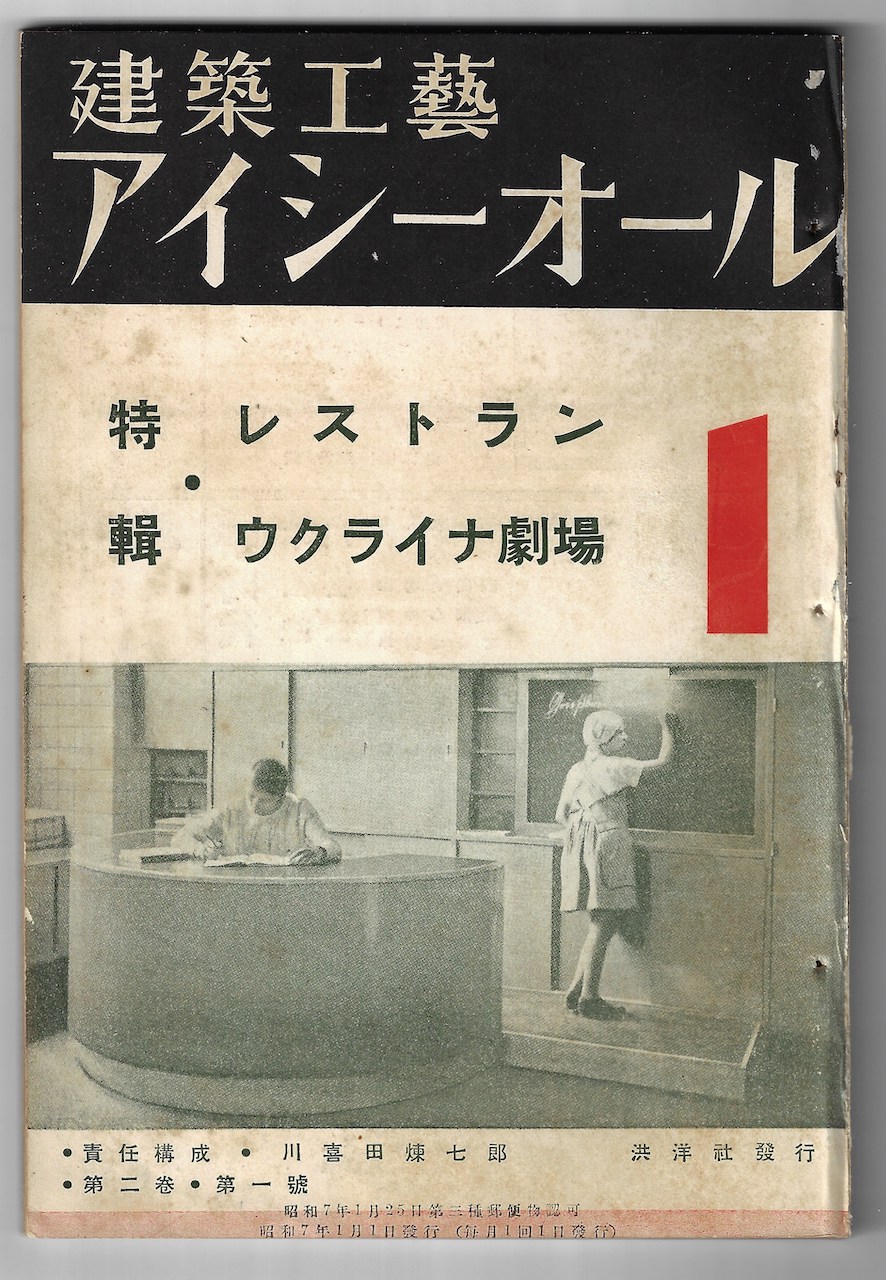
Volume 2, no. 1. 1932.
(2), 84pp., (10)pp. with numerous illustrations and numerous pages of advertisements. 22 x 15 cm. Original illustrated wrappers.
EUR 380
This issue of the magazine is dedicated to the first part of the planning of restaurants and cafes in Japan and Europe (Cafe De Unie, Rotterdam by J.J.P. Oud ). The second part presents the results of the international competition for the State Theatre in Kharkov, Ukraine in 1930-31. Spine with loss of paper, rusty staple removed.
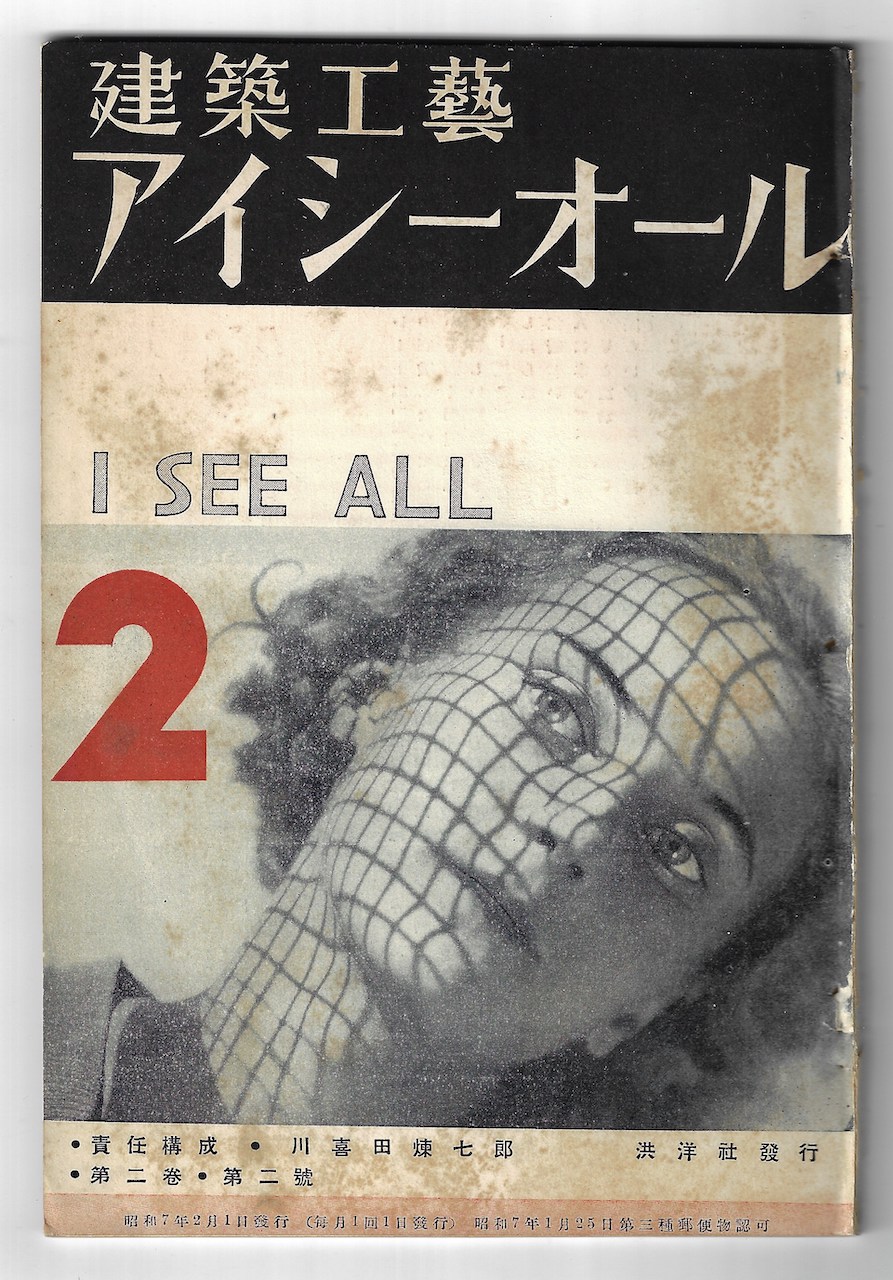
Volume 2, no. 2, February 1932.
(2), 50, (10) pp. with numerous illustrations. 22 x 15 cm. Original wrappers.
EUR 320
The main topic is shop window design and the correct arrangement of goods, taking into account the customer’s perspective. Stapling was replaced by fade stitching with gluing.
Volume 2, no. 8, August 1932.
(2), 59, (13) pp. with numerous illustrations. 22 x 15 cm. Original wrappers.
EUR 320
The topic is, among other things, urban planning. Stapling was replaced by fade stitching with gluing.
Volume 2, no. 9, September 1932.
(2), 59, (13) pp. with numerous illustrations. 22 x 15 cm. Original wrappers.
EUR 350
Special edition about theater construction and stage architecture. Spine with loss of paper, rusty staple removed.
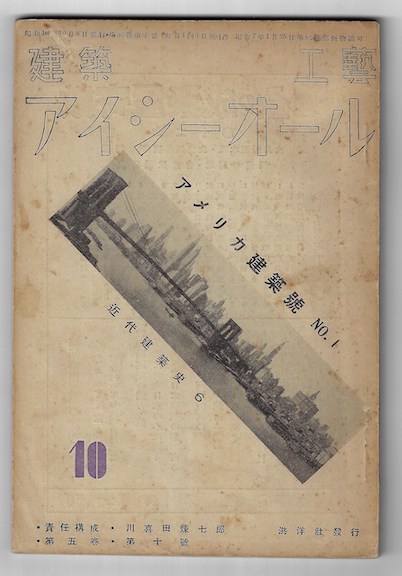
Volume 6, no. 10, October 1935.
Pp. 385-460 with numerous illustrations. 22 x 15 cm. Original wrappers.
EUR 280
Tokushû-gô [= special issue] Amerika kenchiku gô No.1. From the content: Urban Development Chicago (1850-1930), New York, Manhattan, Skyscrapers, Philadelphia, Los Angeles, Apartment Complex, Michigan, confrontation “Old America”. Cover a bit stained.
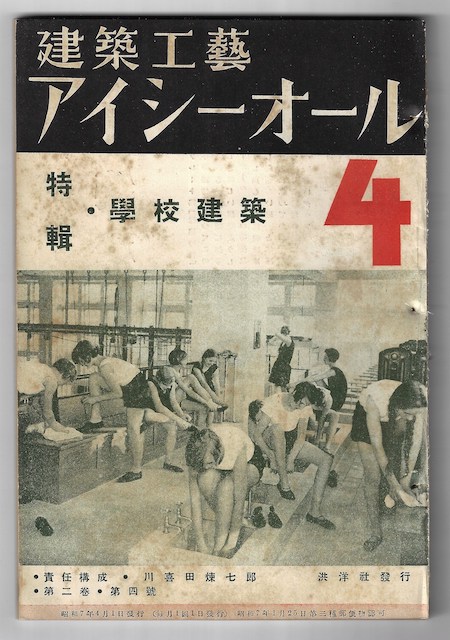
Volume 2, no. 4, June 1932.
(4), 86, (8) pp. with numerous illustrations. 22 x 15 cm.Original wrappers.
EUR 250
The topic is school construction and classroom design. Stapling was replaced by fade stitching with gluing.